
Howard County Deed Records Explained
The Land Records Department indexes far more than deeds. Mortgages, deeds of trust, leases, releases, land contracts and easements all sit in the same system. A search result row alone will not carry the parties, legal description, consideration language, exceptions or recording references, so open the instrument image itself to match the document to the right parcel.
| Deed Type | What It Does | Common Use |
|---|---|---|
| Deed | Records a conveyance between grantor and grantee | Ordinary transfer research |
| Quitclaim deed | Transfers the grantor's stated interest without broad title promises | Interest cleanup or related-party transfer |
| Trustee or personal-representative deed | Records a transfer made through an authorized capacity | Trust, estate or court-directed transfer |
| Deed of trust | Creates a recorded security interest | Financing and lien research |
| Release | Records satisfaction or release of an earlier instrument | Following an encumbrance to its disposition |
Instrument type matters when you read Howard County land records. A deed conveys an interest in property, while a deed of trust or lien only burdens it. Both can name the same parties and point to the same land, so keep the instrument type attached to every result you collect.
Follow Howard County's Grantor-Grantee Index Backward
Begin with the current deed. Guessing at an early owner wastes time. The grantee received the property and the grantor transferred it, so the roles are clear once you read the document. To walk the chain backward, search the current grantor as a grantee before that transfer date, then confirm the property description matches.
- Find the current book/page on the SDAT parcel card and open it in MDLandRec.
- Read the grantor, grantee, date and prior-deed reference from the image.
- Search the grantor in the earlier grantee index, using date and legal-description clues.
- Repeat through electronic results, scanned indexes and older deed books.
- Grantor
- The party transferring the stated interest.
- Grantee
- The party receiving the stated interest.
- Chain of title
- The connected sequence of recorded conveyances for the same land.
- Book and page
- The Howard land-record citation used to retrieve a recorded image.
Get a Howard County Deed Copy
For deed copies from home, start with MDLandRec. The Archives-run service offers remote index and image access through a free account. Pages newer than 100 years may carry a $0.20 per page charge. Older pages cost nothing, and access is free at Archives and Circuit Court workstations. Confirm current terms before ordering.
Need help in person? The Land Records Department sits at 9250 Judicial Way, Suite 1900, in Ellicott City. Recording service runs 8:30 a.m. to 3:30 p.m., and phone help is available at 410-313-5850. Staff can provide access and copies. They cannot research a title or give legal advice. Maryland Courts' general guidance lists ordinary deed copies at $0.50 per page. So verify the counter or certified-copy charge.
The Howard clerk's land-record page posts the office location, hours, record groups, and recording-fee schedule.
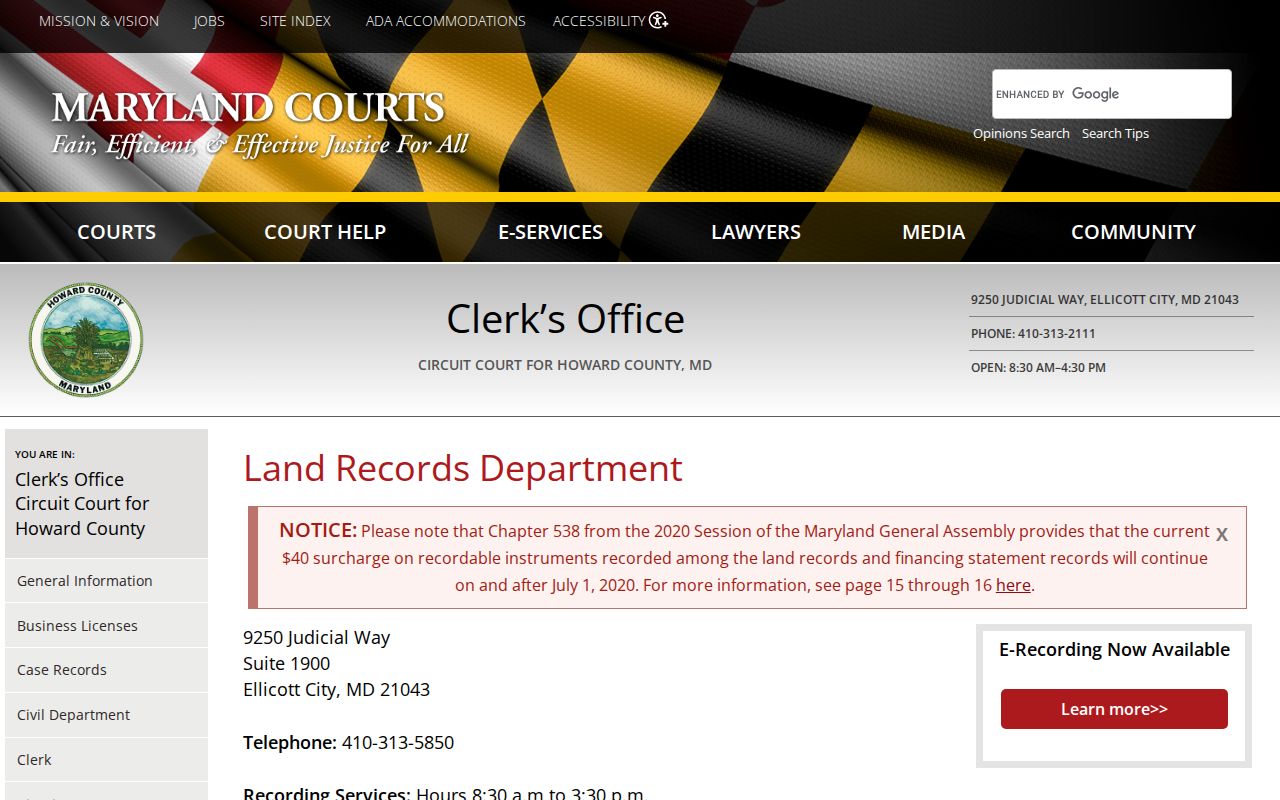
The clerk's office operates on a self-research basis. Staff cannot run a title search for visitors.
Recorded, not guaranteed. Howard County deed records show instruments accepted for recording. They do not establish that every interest was found or provide a legal title opinion.
The SDAT Book/Page Bridge into Howard Deeds
Start with the SDAT parcel search, which lets you look up a parcel by address, account identifier, or map reference. Every result carries a Deed Reference. That book and page pair is your key. Plug both numbers into MDLandRec, hit Jump, and land directly on the recorded deed. Before trusting the match, compare the premises address, any parcel or plat references, and the legal description line by line. This route beats typing a common surname into a search box and hoping the right family appears.
The official MDLandRec result guide shows where the recording date, parties, instrument type, book/page, remarks, and document image links sit on a deed record page.
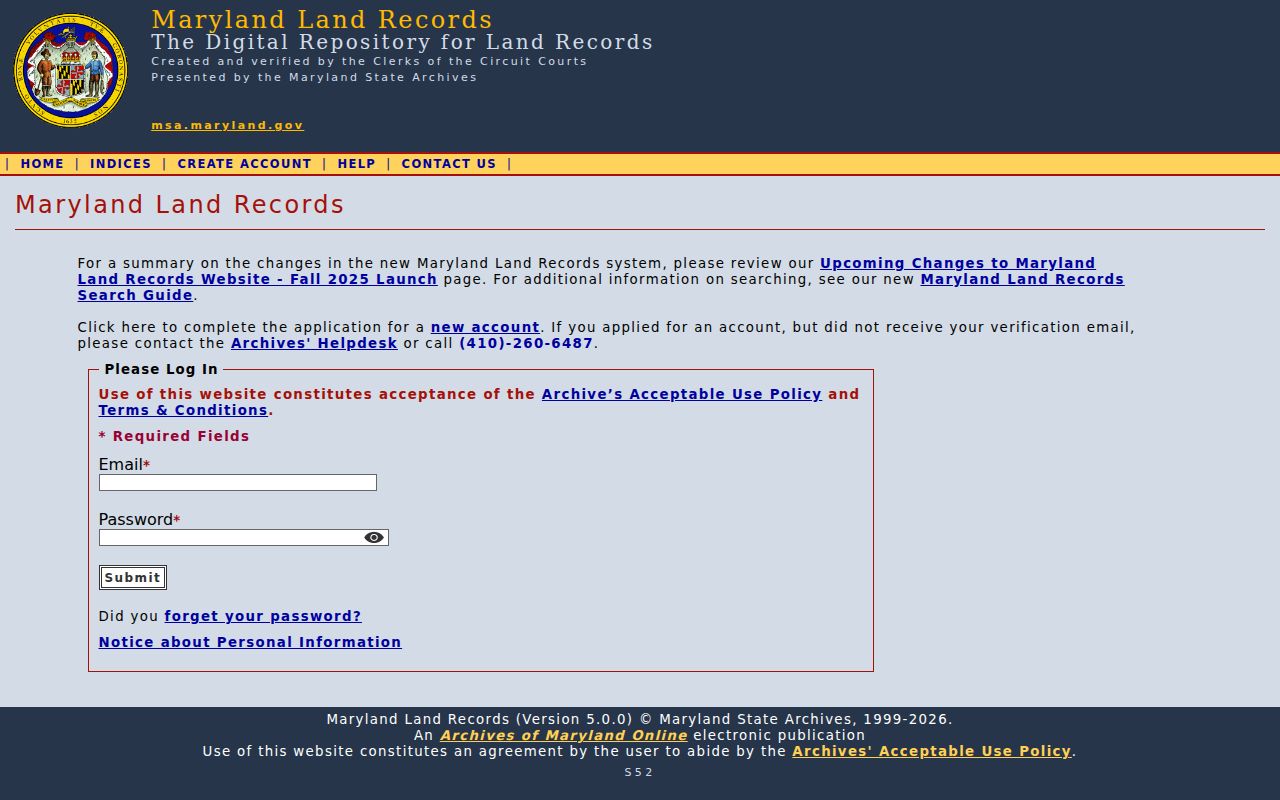
Grab all of those columns together. No single name or date alone proves a match.
Maryland Land Records Search Fields
| Control | Use in a Howard deed search |
|---|---|
| County | Select Howard County |
| Book and Page | Jump from an SDAT deed reference |
| Last Name / Corporation | Search a party with exact, begins, contains, fuzzy or Soundex-style modifiers |
| Ownership and Party Type | Limit corporation/individual and grantor/grantee roles |
| Instrument and Remarks | Separate deed, trust, release, easement and related entries |
| Cross Reference and Date Range | Follow linked instruments and narrow time |
The November 2025 release changed the sign-in routine. New accounts are required. Email two-factor authentication is now standard, and only one device can stay logged in at a time. Historical, retired, and additional indexes live under the Indices area of the site.
Howard Land Records Predate County Status
Howard County deed records reach back to 1840. Howard was still a district rather than a county at the time. Independence came in 1851. Maryland State Archives finding aids list separate grantor and grantee index series covering 1840 through 1983. These split into distinct 1840-1919 and 1920-1964 volume groups. The original courthouse stayed in use. The deed books avoided the losses that often come with moving a county's records.
A modern name search can still miss older deeds, though. In that case, work through the Archives grantee-index finding aid. Then try the scanned index volumes, the deed books and the Archives inventory. Expect old descriptions to lean on vanished roads, mills, waterways and landings. The names of adjoining proprietors anchor many of them too.
Trace Howard Encumbrances Separately
A deed chain is just one strand of a Howard County parcel's record. Encumbrances must be traced on their own. That means searching deeds of trust, assignments, modifications, releases, easements, covenants and rights-of-way under both parties. Cross-references deserve careful attention. A paid loan stays on the record until its release or satisfaction is matched. Match it to the instrument and the parcel.
Judgments and mechanics liens sit in a different system. The Maryland Judgment and Liens search plus a Circuit Court case file are usually needed to see them. Tax, water and sewer delinquencies belong to Howard Finance. No single official report combines every encumbrance for one parcel. The official judgment and lien form lets you narrow by person or company. You can also filter by county and filing date for that separate check.
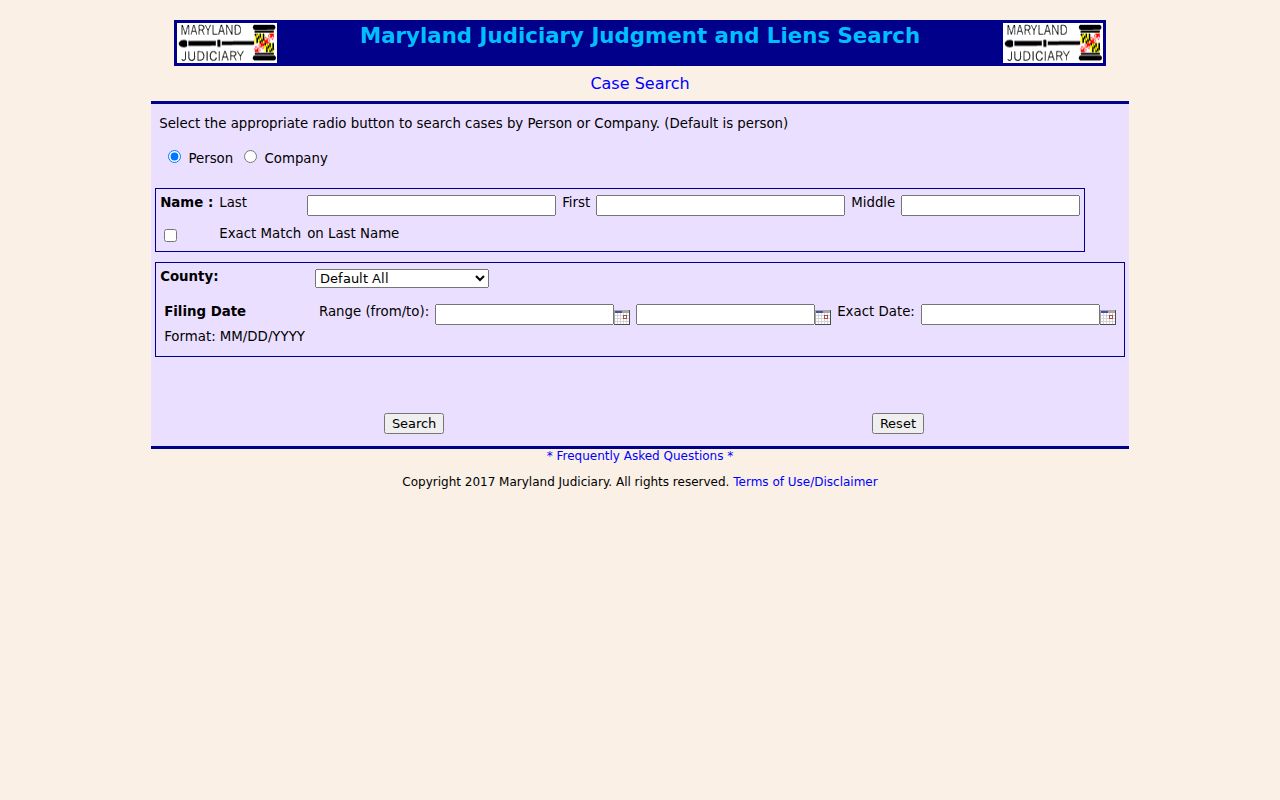
That form explains why deed-index research and court-lien research stay separate parts of the trail.
For every possible encumbrance, keep an auditable note. Record the instrument type and recording date. Note the book and page. Add the indexed parties, the stated scope, the affected land and any later release. Search the owner, prior owner, lender, trustee and developer under both grantor and grantee roles. An assignment may hide under a lender. A release may appear under a trustee. A later deed by itself proves nothing about whether an earlier mortgage, covenant or easement vanished.
Court liens need their own file. Preserve the case number, claimant, debtor, filing date, disposition and the parcel connection. A result alone does not establish attachment, priority or satisfaction. For an easement, read the instrument and its referenced plat. The GIS map layer locates the feature but cannot supply the controlling terms.
Monitor Howard Deeds Without County Alerts
Howard County publishes no automatic fraud-alert signup for deeds. Try a periodic property search on MDLandRec instead. Follow it with a quick call to the clerk. Do that if an unfamiliar instrument shows up. The Maryland Insurance Administration points owners who suspect fraud toward law enforcement, lenders, title insurers, and regulators.
Commercial monitoring has a hard limit. It can only tell you a change already happened. It cannot stop a fraudulent deed from being filed. Before reporting anything suspicious, save key details. Record the book and page, instrument date, parties, and the deed image itself.
Keep a dated baseline for a clean review. Record the latest deed, any open security instruments, and the releases you already know about. A later property records search can then focus on newly indexed items. These include name variants and legal-capacity terms. When something unfamiliar appears, pull the actual image. Use MDLandRec or the clerk before drawing conclusions.
Repair a Broken Howard Deed Chain
A deed chain can break for innocent reasons. The index may have changed eras. A party may be indexed under a legal capacity. Or the property description may point to another instrument entirely. Start from the last verified deed image and copy everything. Include grantor, grantee, recording date, instrument type, book and page, prior-deed reference, legal description, consideration language, plat citation, and every cross-reference. Then search the former grantor as an earlier grantee. Try middle initials, corporate suffixes, trustee labels, personal-representative terms, and spelling variants. The current MDLandRec modifiers can widen a name search. The land description tells you whether a broader hit truly belongs in the chain.
Electronic name results eventually run out. When that happens, move to the Indices area and the Maryland State Archives finding aids. Howard District records start in 1840, which predates county status in 1851. The verified grantor and grantee series run through 1983, with volume groupings covering 1840 to 1919 and 1920 to 1964. Work from an index entry straight to the cited deed book instead of reading volumes page by page. Historic descriptions may name roads since renamed. They may also name mills, streams, Elk Ridge Landing, adjoining proprietors, or tract names rather than any modern street address.
Some gaps are not really gaps. A trustee or personal representative can convey property through an estate or trust instrument. A foreclosure may involve a court case plus a trustee deed. A tax-sale list records a lien-certificate process, not immediate ownership, so later court and deed records still matter. Corporate mergers, association deeds, and government acquisitions may call for an entity or legal-capacity search. Always preserve the authority stated in the document rather than guessing at family or organizational ties.
Do not stop once the ownership sequence connects. Run each owner and property reference through a search for deeds of trust, assignments, releases, easements, restrictions, and rights-of-way. Match every release to its original secured instrument. Check judgments and mechanics liens through the judiciary and clerk sources, and tax delinquencies through Howard Finance. PLATS.NET and recorded plan references can clarify which lot is affected. A GIS map or plat image never settles lien priority.
A purchase, sale, estate distribution, or dispute may depend on the chain. If so, hand the citations to a qualified title professional or attorney. The Howard clerk offers public self-research access and copies. The clerk cannot perform a title search or give legal advice. What the public property search delivers is a documented, reproducible trail, not a declaration that title is clear.