
What Howard County Property Tax Records Separate
SDAT keeps the real-property assessment; Howard County Finance bills and collects. Reading both property records keeps valuation, credits, rates and payment history in their proper columns.
| Field | What It Shows | Where |
|---|---|---|
| Assessment year and current value | SDAT's value estimate for its cycle | SDAT parcel card |
| Land and improvement components | How the assessment is divided | SDAT parcel card |
| Credits and exemptions | Relief affecting taxable amount or bill | SDAT and county credit records |
| Current and prior bills | Charges, payment history and balance | Howard Finance |
| County, state, fire and ad valorem rates | Published fiscal-year rate components | Howard Finance |
An assessment is never the recorded sale consideration. Nor is a tax bill an appraisal, and credits can cut the tax without touching SDAT's underlying market-value estimate.
Look Up Howard Tax Bills
Begin with the county's Real Property Tax page. It links the current lookup and payment tools plus prior-year bills, so keep the SDAT account number handy to confirm the bill belongs to the intended parcel.
- Find the parcel in SDAT and save its district, account, premises and owner fields.
- Open Finance's county-linked lookup and match the account and address.
- Review the current bill, prior-year bill and payment history separately.
- Return to SDAT for assessment and homestead status; use the tax-sale list only for delinquency research.
- Assessed value
- SDAT's value for the applicable assessment year and cycle.
- Tax rate or levy
- The published rate applied to the taxable assessment.
- Homestead credit
- Relief that limits eligible owner-occupied assessment growth for tax purposes.
- Tax lien
- A claim arising from unpaid property charges; a certificate sale is not an immediate deed.
Appeal a Howard County Assessment
Owners get 45 days from the assessment-notice date. SDAT takes appeals online or on paper. The online form asks for County, Notice Number and Control Number, while paper filers choose a written appeal or a telephone, video or personal hearing, depending on availability. Evidence should target the valuation date. Comparable sales and property facts matter more than the size of the resulting tax bill.
Appeal window. File with SDAT within 45 days after the notice date. A later appeal may proceed from the supervisor to PTAAB and then Maryland Tax Court under the applicable deadlines.
SDAT and Howard Finance Roles
SDAT Real Property Search supports address, street, account identifier and map-reference modes, but not owner name, town, subdivision or ZIP. Its record provides owner, mailing and premises addresses, deed reference, legal description, map/grid/parcel and assessment fields. Howard Finance hosts billing, rates, payment status and prior-year history.
Value or owner-card questions go to SDAT Howard at 410-480-7940. Bill questions go to Finance at 410-313-2062. This office split is the quickest way to avoid asking the tax collector to correct an assessment record.
Howard's July 1 Billing Calendar
Howard Finance bills real property every July 1. A semiannual schedule is open to many taxpayers. Payments run through the online vendor, the telephone IVR at 1-667-222-5040, mail to the county's Philadelphia payment box, or an in-person cashier, and the county warns that postmarks do not control deadline application. The published convenience fee is $1 for e-check and 2.35 percent for debit or credit cards, with a $2 minimum, and card payments need three to five business days. Verify current terms and current fiscal-year rates first. The county-linked payment search provides the transaction entry point for the tax bill.
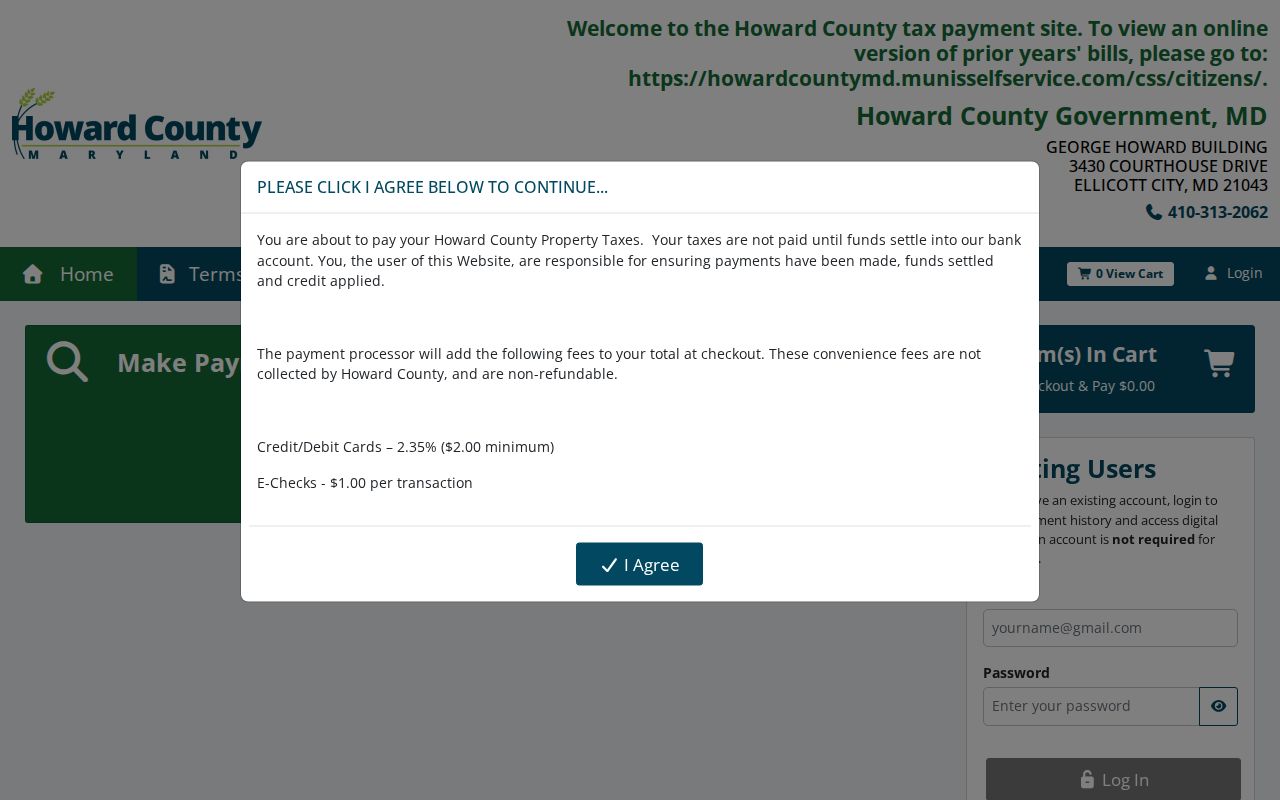
Match the account and premises shown before you pay. The county tax page puts the lookup, rate and payment choices together on one screen.
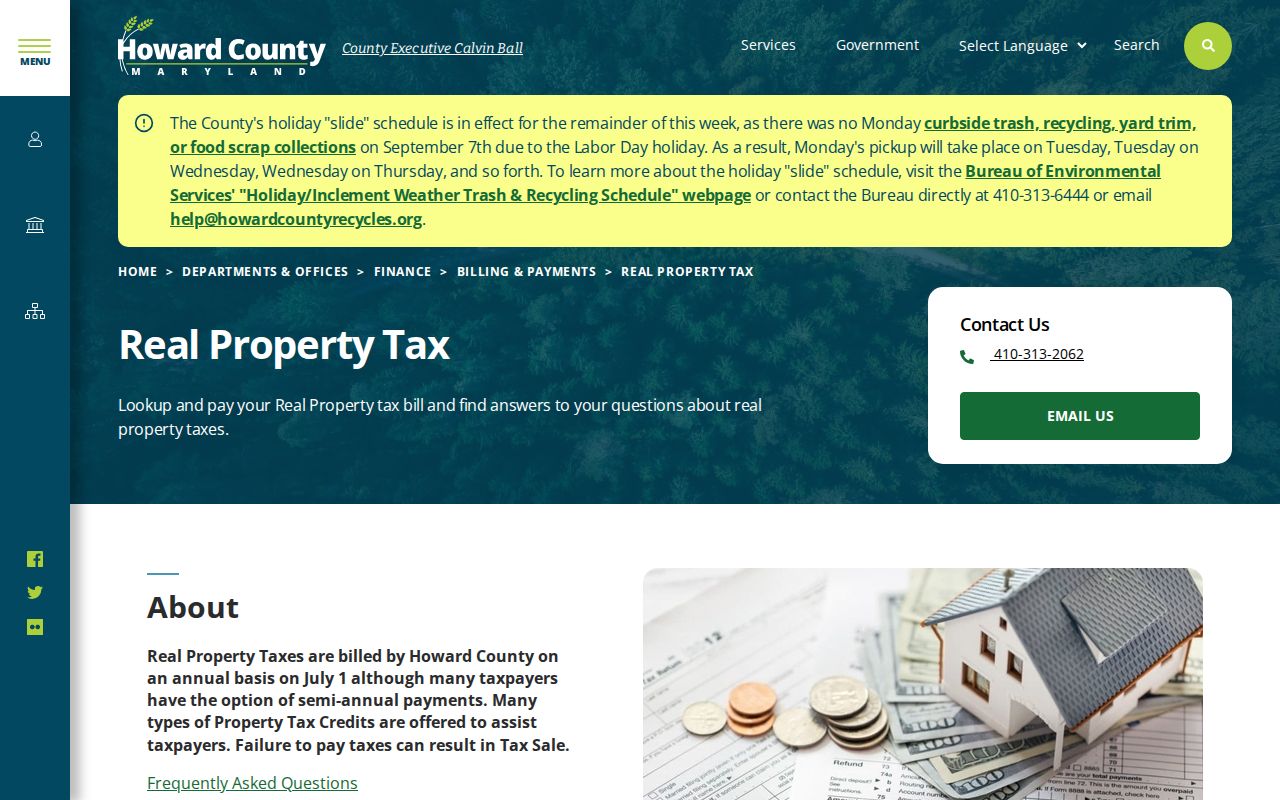
Confirm any live balance at the official linked portal instead of a saved bill image.
Howard County Reassesses in Three Areas
Maryland reassesses on a three-year cycle. Howard County splits into three reassessment areas. The parcel card's Assessment Year sets the valuation context. Because a deed transfer, a reassessment notice and an annual bill follow different calendars, a recent sale price will not necessarily equal the current assessment. SDAT describes its figure as market value for the assessment date. Its 2025 ratio survey put Howard residential assessments at a 93.5 percent median ratio to sale price and a 94.4 percent weighted ratio overall. They are statistics, not tax rates or parcel appraisals.
Howard Appeal Form Evidence Fields
The online assessment appeal starts with county, notice number and control number. Paper filers supply owner and property contact information, a selected hearing method and comparable properties. The worksheet and sales listing come free. An additional comparable worksheet is listed at $1.
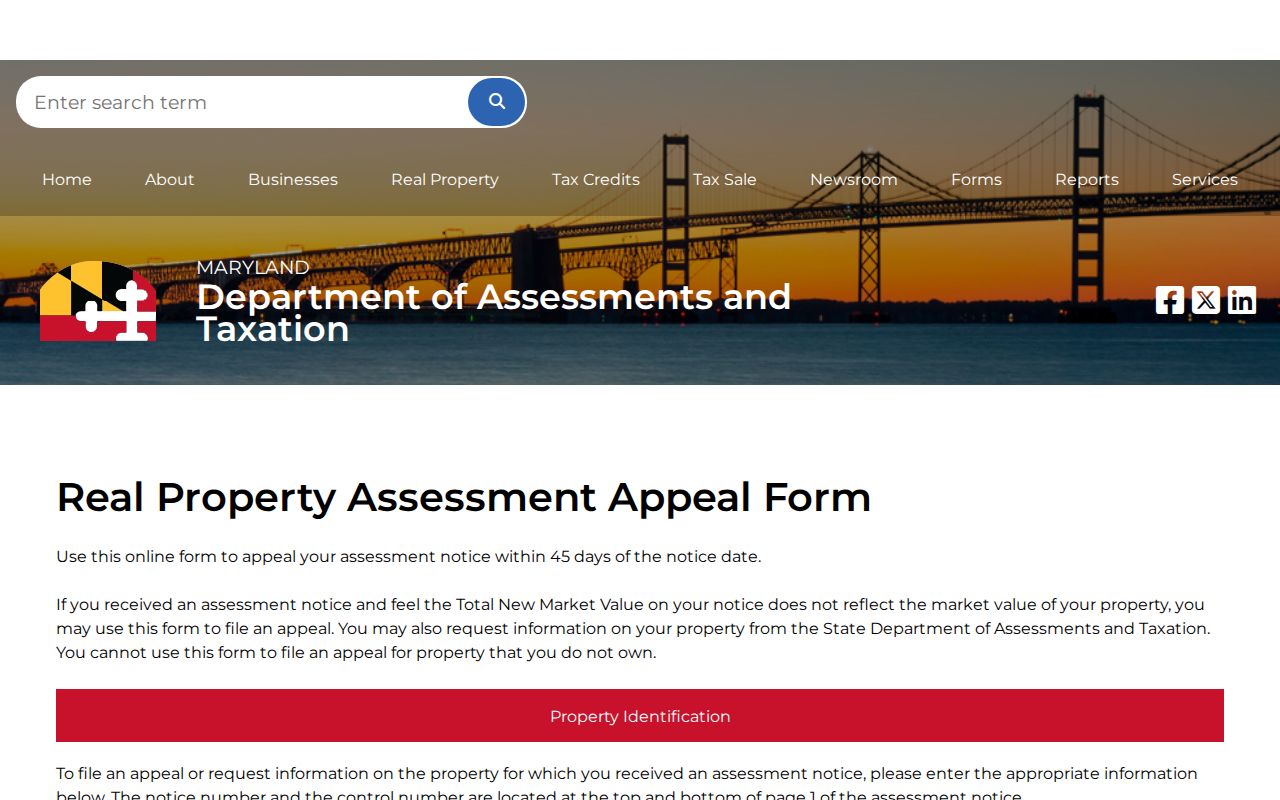
The form shows why the notice itself is essential. An address alone does not supply the two control identifiers.
Howard Property Tax Credits
Maryland's homestead credit caps the eligible assessment growth used for taxation. It runs on its own application and status process. Howard adds local credit layers. December 2025 legislation widened the county senior tax credit's eligibility. It also extended the Aging in Place credit from eight to ten years.
Confirm current eligibility and application dates before relying on an earlier bill. Check how the state and county programs interact. A credit can change the amount due while leaving the assessed market-value figure intact.
New purchasers receive a homestead application after the deed is recorded. SDAT then updates its records. Recording and assessment-roll updates run on separate schedules. Check the parcel card for application status. Never assume a prior owner's credit continues after a conveyance.
Keep credit work separate from an assessment appeal. A credit application asks whether program conditions are met. An appeal contests the value or classification on the notice. When both issues exist, preserve separate confirmation numbers, filing dates and supporting documents. That way success in one process is not mistaken for action in the other.
Howard Tax Sales Create Lien Certificates
Howard's annual tax sale addresses delinquent property tax plus water and sewer charges. Its public property list displays parcel number, owner, address and assessed value. It also shows sale amount and HBP columns. These are certificate-sale facts, not a deed history. Nor do they prove that a winning bidder immediately owns the land.
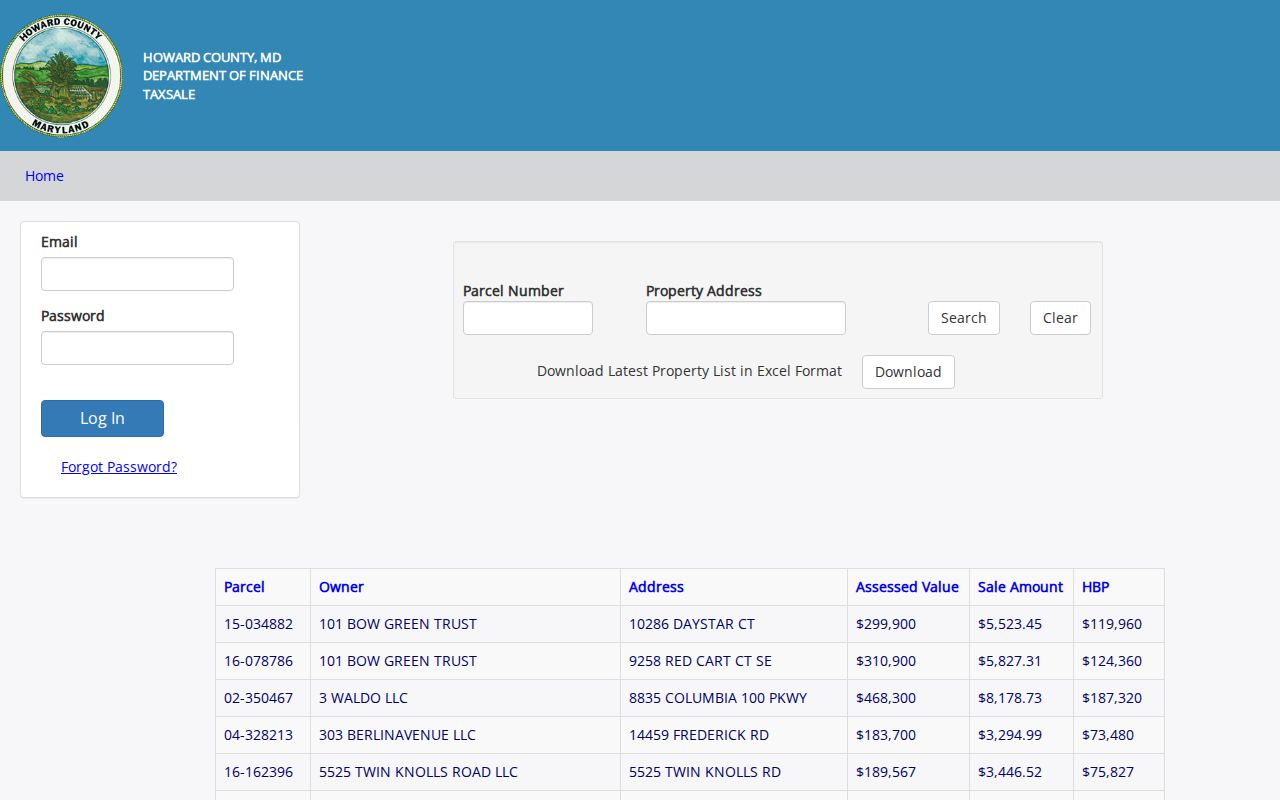
A tax-sale listing is not the whole story. Redemption and any later foreclosure of the right of redemption run through separate legal steps. Confirm a live balance with Finance. Check any resulting case through court records. Only then should a list entry support conclusions. The owner column is another source-specific label, so date it and compare it with SDAT and the latest recorded deed, since billing, assessment and land-record updates rarely coincide. Assessed value supplies tax context; the sale amount reflects delinquent obligations and process, and neither equals consideration from an ordinary deed transfer.
Do not equate sale amount with value. A tax-sale amount reflects delinquent obligations and process, not an arm's-length market sale price.
Reconcile Howard Property Tax Values
Begin with three labeled dates. These are the SDAT assessment year, the Finance bill year, and the deed's recording or transfer date. Each record answers a different question. SDAT's figure estimates market worth for the cycle. Finance then applies fiscal-year county, state, fire and ad valorem rates to the taxable assessment after credits. The deed records only the consideration and transfer details of that one conveyance. Exemptions, partial interests, financing, related-party terms and assessment-cycle shifts can pull the three figures apart. None of the records is wrong.
Read the SDAT card piece by piece. Keep every field it shows: land value, improvement value, total current value, assessment year, use, principal-residence indication, exemptions, deed reference and sale information. The premises address identifies the parcel. Do not substitute the owner's mailing address. Suppose a structure or land characteristic looks wrong. Retain the exact field plus the evidence supporting a correction. A tax-payment receipt cannot correct the assessment description on record. The assessment office handles that edit, not the payment system.
Treat the Finance account as a billing history. Separate the original charge from credits, payments, balance and delinquency status for each year. Howard offers current-bill lookup, prior-year bills and payment history, with annual July 1 billing and a semiannual option for many taxpayers. Online, phone, mail and cashier routes process differently. The county warns that postmarks do not count toward deadlines. Allow three to five business days for electronic payments. Verify a live balance immediately before any time-sensitive payment. That final check closes the gap between the record and reality.
Value disputes and bill-arithmetic disputes travel different paths. A disputed assessment goes through the appeal route, so file within 45 days of the assessment notice using the online notice and control numbers or a paper hearing choice. Comparable sales should match the valuation date and the property's characteristics. Review starts with the supervisor or local assessment office, then the Property Tax Assessment Appeals Board, and finally Maryland Tax Court under separate deadlines. A credit application is not a value appeal. Delinquent accounts land on the public tax-sale list. Its parcel, owner, address, assessed-value, sale-amount and HBP columns describe the county's lien-certificate process. Confirm redemption figures with Finance and any foreclosure through court records and the later recorded deed, preserving the search date since balances and status change.